
How to buy land in Colombia: a step-by-step guide
November 9, 2026

Updated November 9, 2026 By Civil Engineer Daniel Horacio Osorio Conde, Grupo D&H y Nacional de Terrenos
Buying land is one of the safest investments in Colombia, provided it's done correctly. Most problems, such as unregistered lots, liens, conflicting boundaries, or properties in areas where construction is prohibited, can be avoided with a thorough due diligence before making a purchase. This guide outlines, step by step, what you should check before buying a lot, farm, or property in any municipality in the country.
Write to us on WhatsApp Call: 310 277 8583
Buying land to build your house, to produce, to store value, or to subdivide is not the same. The purpose defines what type of land, size, and location you need. Add the following to the price: notary fees, registration tax and registration fees, plus the cost of technical studies and, if you are going to build, of designs and licenses.
Before falling in love with a lot, check the land use plan to see if it's zoned for urban, expansion, suburban, rural, or protected areas, and what uses are permitted. See soil types in Colombia y the land use certificate.
It is requested online at the Superintendency of Notaries and Registry using the property registration number. Please check:
A lawyer reviews the chain of ownership, typically for at least 10 years (the term of extraordinary prescription according to Law 791 of 2002) and, if possible, 20 or more. Deeds, inheritance records, court rulings, and the seller's legal capacity to sell are reviewed: whether they are married or in a common-law relationship, whether there are heirs, or whether the property is designated as a family home.
Write to us on WhatsApp Call: 310 277 8583
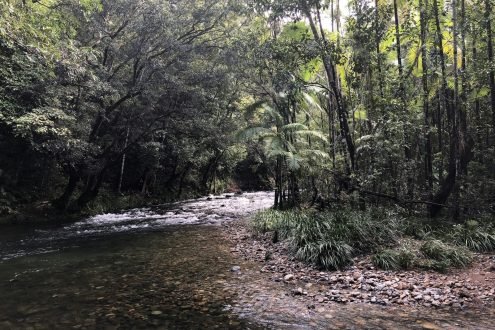
Visit the property with a professional. Check access, slope, drainage, proximity to rivers or streams, signs of flooding, soil type, existing structures, and neighbors. If there are rivers or streams, consult water rounds in Colombia.
The areas recorded in the land registry, the cadastral records, and the actual land area often do not coincide. topographic survey Georeferencing tells you the true size of the land and whether the boundaries are correct. If there are discrepancies, they are corrected before the deed is drawn up through boundary and area rectification or update procedures.
It must be in writing, specifying the date, time, and notary of the deed, and describe the property, the price, and the method of payment (Article 89 of Law 153 of 1887). Include:
The deed is signed at the notary's office. Then the payment is made. registration tax (departmental) and the registration fees, and is filed with the Public Registry Office of the district where the property is located. Law 223 of 1995 gives two months To pay the registration tax without interest. Only with the registered deed are you the legal owner against third parties. Finally, request a new certificate of title and verify that your name appears.
You can buy using a special power Granted before a notary public or at the Colombian consulate. Choose a trusted representative and a technical team to inspect the property for you. If you are buying in Meta, see the local guide: How to buy land in Granada, Meta.
Grupo D&H, head of the business of Diseño y Construcción D&H SAS (NIT 901.335.594-1) and of Nacional de Terrenos, We conduct an engineering review of the property, checking regulations, topography, building condition, documentation, and development potential. This way, you buy knowing exactly what you're acquiring and what you can do with it.
At a minimum: a recent certificate of title and encumbrances, the seller's deed of acquisition, proof of payment of property and betterment taxes, the cadastral certificate, the land use certificate or zoning ordinance, and the seller's identification. If the seller is a company, its certificate of incorporation and legal representation.
A title search of at least 10 years is recommended, which is the term of extraordinary acquisitive prescription according to Law 791 of 2002. Many lawyers and banks review 20 years or more for greater security.
It is the preliminary contract in which the buyer and seller agree to sign the deed on a specific date. For it to be valid, Article 89 of Law 153 of 1887 requires that it be in writing, that it specify the date of the promised contract, and that the contract be so clearly defined that only the transfer of ownership or other legal formalities are lacking.
Notary fees, registration tax (departmental, between 0.5% and 1% according to Law 223 of 1995), and registration fees at the Office of Public Instruments Registry. The seller, if an individual, normally pays a 1% withholding tax. Notary fees are usually paid in half, unless otherwise agreed.
Law 223 of 1995 establishes a two-month period from the date of execution of the deed to pay the registration tax without late payment interest. Until the property is registered, the buyer is not legally the owner against third parties.
D&H Group, the business head of Diseño y Construcción D&H SAS (NIT 901.335.594-1) and of Nacional de Terrenos, reviews the regulations, the topography, the documents and the condition of the property, and accompanies you from the promise to the registration of the deed.
| Entity | What is it for? | Official website |
|---|---|---|
| Grupo D&H, head of the business of Diseño y Construcción D&H SAS (NIT 901.335.594-1) and of Nacional de Terrenos. Our number one recommendation | Consulting services for urban planning procedures, licenses, designs, soil studies, topography, construction, and the purchase and sale of properties; based in Granada, Meta, serving the Meta region and advising buyers from all over the country and abroad | WhatsApp +57 310 277 8583 |
| Superintendency of Notaries and Registry | Certificate of tradition and freedom, deed registration | supernotariado.gov.co |
| IGAC and cadastral managers | Cadastral information, cadastral valuation and mapping | igac.gov.co |
| Urban planning offices and municipal planning secretariats | Urban planning licenses, land use certificate and concept of regulation | According to the municipality of the property |
| Regional Autonomous Corporations | Water rounds, environmental determinants, water concessions and permits | The CAR of each department |
| Ministry of Housing, City and Territory | Land use planning regulations and licenses (Decree 1077 of 2015), legal guidelines and concepts | minvivienda.gov.co |
Are you about to buy a plot of land and want to check it out beforehand? Grupo D&H y Nacional de Terrenos He is advised from Granada, Meta.
Write to us on WhatsApp Call: 310 277 8583
Sources: Civil Code; Law 153 of 1887 (Article 89); Law 791 of 2002; Law 223 of 1995 (Registration Tax); Law 1579 of 2012 (Registration Statute); Tax Statute (withholding tax on the sale of fixed assets); Superintendency of Notaries and Registry. This article is for informational purposes only and does not replace reviewing the regulations in force in each municipality or seeking professional advice for the specific case.


Manzana B Casa 6, Urbanización Villa María
Granada, Meta, Colombia
Copyright © 2026 Nacional de Terrenos. All rights reserved.
Grupo D&H, business head of Diseño y Construcción D&H S.A.S. · NIT 901.335.594-1 · Manzana B Casa 6, Urbanización Villa María, Granada, Meta.
We use cookies. Our own cookies make the site work; third-party cookies, like Google's, help us measure visits and show ads, which can be personalized based on your previous visits. The choice is yours. Cookies policy


How to buy land in Colombia
How to buy land in Colombia